

Every few months, we send out a newsletter to all Gruntwork customers summarizing updates we’ve made since the last newsletter, along with news from the DevOps industry. Note that some of the links below may lead to private repositories in the Gruntwork Infrastructure as Code Library that are accessible only to customers.
As always, if you have any questions or need help, email us at support@gruntwork.io!
In This Issue
- Winter holiday closure
- Announcing a Terragrunt Scale Free Tier!
- Opt-in environments for Terragrunt Scale
- Managing dependencies on units inside Stacks
run --alljust got faster!- The Terragrunt
--filterflag is feature complete - New Terragrunt experiments interface, release artifacts, & dependency exclusions
Gruntwork Updates
Winter Holiday Closure
As we do every year, Gruntwork will be suspending all operations for two weeks during the new year holiday, beginning Monday December 22nd through Friday, January 2nd. This gives our employees a much-deserved break to focus on themselves and their families over the holiday period. Please be aware that we will not respond to non-critical Slack, email, or support tickets during this interval. We do have a rotation monitoring for urgent, p0 issues. We’ll return to the office refreshed on Monday, January 5th, at which point we’ll prioritize responding to any communications we receive in the interim.
We hope you’ve had a fulfilling 2025, and send our best wishes for the new year! We’ve got lots of exciting things in store, so stay tuned for our January newsletter.
Announcing a Terragrunt Scale Free Tier!
This month we’re announcing the Terragrunt Scale free tier! It will become available early next year, and you can join the waitlist now. This new tier offers a no-cost option for individuals and small teams who want powerful Infrastructure as Code automation without being locked into a black-box SaaS. The new tier includes GitOps workflows, dependency-aware orchestration, drift detection, and automated IaC updates, with some limits on utilization. The free tier will be available in late Q1; the Team and Enterprise tiers are available today.
Timing matters. HashiCorp recently notified HCP Terraform Free tier users that they’ll be required to upgrade to a paid plan by March 31, 2026. For many teams, this creates uncertainty around long-term access to foundational infrastructure tooling. We’ll begin onboarding users on our waitlist to Terragrunt Scale in the new year, moving as quickly as possible to support the community.
Two years ago, when Terraform’s license changed, we helped co-found OpenTofu to ensure the IaC engine remained open and community-governed. Today, we’re extending that same belief to the platform layer: basic infrastructure management should be accessible by default, not gated behind enterprise paywalls. If you’re operating a startup, working on a hobby project, or know someone else who may be interested, don’t hesitate to join the waitlist.
Opt-in Environments for Terragrunt Scale
Sometimes — especially when setting up new repositories — you may want to constrain Terragrunt Scale to operate on just a subset of your infrastructure. Currently, these tools operate on everything within your infrastructure repository, including units which aren’t in any of your specified environments (e.g. in .gruntwork/environments.hcl). Today the only way to opt-out is to provide an ignore list. While functional, this can be tedious to maintain and doesn't always neatly map to users’ expectations.
We’ve now introduced the ability to opt-in your environments, ignoring everything else by default. Today this is exposed via the PIPELINES_FEATURE_EXPERIMENT_IGNORE_UNITS_WITHOUT_ENVIRONMENT feature flag, though we intend to make this default behavior in the next major Pipelines release. With this feature enabled, only units within an explicitly declared environment will be included in your runs, making it easier to incrementally configure new repos with Terragrunt Scale, and giving you more confidence that only the infrastructure you intend is under management. See the docs for more info.
Managing Dependencies on Units Inside Stacks
If you’ve encountered difficulty planning units which depend on units inside a stack, we’ve got you covered. Set the PIPELINES_FEATURE_EXPERIMENT_GENERATE_ALL_STACKS feature flag to generate all stacks within your repository before each run (rather than on-demand based on other context). This ensures that the necessary outputs are available when you plan and apply your changes. See the docs for more info.
The Terragrunt roadmap also includes plans to expose outputs from units within stacks on the stack itself, allowing you to declare direct dependencies on stacks. That work is planned after the release of Terragrunt 1.0 sometime next year, and you can expect a public RFC next spring. Meanwhile, if you have questions or comments regarding stacks chat with us in Terragrunt Discord.
Terragrunt Updates
The run --all command is much faster
As of release v0.93.1 the run --all command has become much faster for many users. If you are using the --auth-provider-cmd flag, or any other command that requires performing expensive work during HCL parsing, you can expect significantly faster runs.
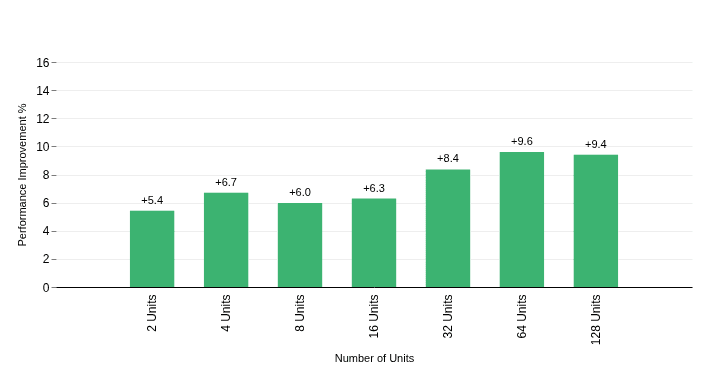
The --filter flag is feature complete
As of release v0.96.0, the --filter flag is now feature complete, supporting all the functionality outlined in RFC #4060. The biggest change since our last newsletter update is support for Git-based expressions.
Git-based expressions allow you to have Terragrunt determine what to run in your repository based on what's changed in Git.
# Find all units that changed in the last commit
$ terragrunt find --filter '[HEAD^...HEAD]'

# Run a plan on all units that changed in my feature branch
$ terragrunt run --all --filter '[main...feat/my-new-server]' -- plan
See the Terragrunt Filter docs for additional information.
A Unified experiment interface
Terragrunt did not always have support for the experiment system, and thus certain experimental functionality was enabled in an ad-hoc manner that didn’t utilize the same API for controlling experiments (turn on all experiments with --experiment-mode, turn on a specific experiment with --experiment and expect all active experiments to be documented in Active Experiments).
As of release v0.96.0 all Terragrunt experiments are now part of the same experiment system. You can reliably control the behavior of all experiments using the --experiment-mode and --experiment flag, and all experimental functionality is documented in the same place.
For backwards compatibility, certain experimental functionality have been updated to behave as aliases for the relevant experiment (e.g. the --experimental-engine flag now just enables the iac-engine experiment).
External dependency exclusion is now the default
For years Terragrunt would automatically include dependencies not explicitly targeted in runs, even when they were discovered in directories outside the current working directory where Terragrunt was being run. This has caused confusion for users and unexpected behavior.
As of release v0.95.0, Terragrunt now excludes external dependencies by default. You can preserve the previous behavior with the --queue-include-external flag or by using the new --filter flag.
New Terragrunt release artifacts
As of release v0.93.6 you can now download Terragrunt as a packaged .zip or .tar.gz file for all supported platforms from GitHub release assets (standalone binaries remain available for backwards compatibility):
- macOS AMD 64-bit
- macOS ARM 64-bit
- Linux 386
- Linux AMD 64-bit
- Linux ARM 64-bit
- Windows 386
- Windows AMD 64-bit
In addition, Windows binaries are now signed, preventing annoying security warnings on Windows workstations.
—
Thanks, and see you next year!



-
No-nonsense DevOps insights
- Expert guidance
-
Latest trends on IaC, automation, and DevOps
-
Real-world best practices